

September 22, 2026
Before Harvest Equipment Goes Back to the Shed, Fix the Problems This Season Exposed
Use end-of-season inspections to catch hydraulic, PTO, cooling, bearing, and tire issues before parking harvest equipment for the season.
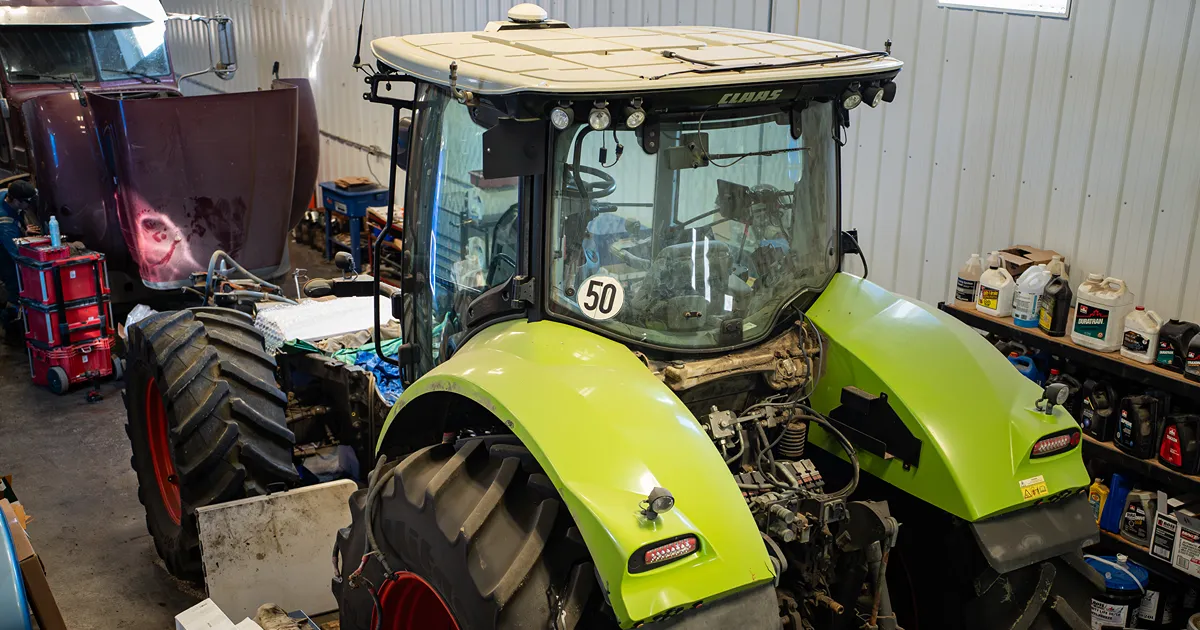
Harvest has a way of exposing problems that lighter work can hide. Before tractors, balers, swathers, vineyard equipment, and trailers get parked, use operator notes and end-of-season inspections to repair the faults that surfaced under load.
A tractor that ran fine in spring may start running hot after hours of harvest work. A baler may develop a vibration only when it is full, while a vineyard tractor may lift more slowly after a long, hot day.
Those problems rarely fix themselves in the shed. Smart harvest equipment repair starts while the symptoms are fresh, so you can correct faults before next season puts the machine under the same load again.
Why should you repair harvest equipment before putting it away?
End-of-season service gives you something a winter inspection may not: fresh information about how the machine behaved while working hard. Once equipment is unloaded, cooled down, cleaned, and parked, intermittent symptoms can become difficult to reproduce.
Alameda County agriculture is dominated by nursery products, livestock, and wine grapes, with Livermore Valley providing an especially strong wine-growing connection. Northern Nevada has a different rhythm, with agriculture heavily oriented toward range livestock and hay; alfalfa remains the state's leading cash crop.
So, whether you are wrapping up vineyard work near Livermore or finishing late-season hay work around Reno, don't let the repair list disappear when the dust settles.
1. Fix hydraulic leaks and weak hydraulic performance while the evidence is fresh
If you spent the season topping off hydraulic fluid, wiping down wet cylinders, or waiting an extra few seconds for an implement to lift, the machine has already given you a warning.
Inspect hoses for leaks and abrasion, check fittings and couplers, look for wet cylinder seals, and investigate slow or weak operation. Contaminated fluid or recurring fluid loss also deserves attention rather than another refill.
This is especially relevant for loaders, vineyard tractors, compact tractors, balers, and hydraulic implements. An "add fluid and park it" strategy simply carries the same problem into the next demanding job.
2. Repair PTO driveline wear before vibration becomes failure
PTO shafts and drivelines spend long hours transferring power to mowers, balers, sprayers, and other implements. Under heavy load, worn components often announce themselves through vibration, clunking, looseness, or abnormal noise.
Check:
- U-joints and PTO shafts for play or wear
- Couplers for looseness or damage
- Guards for damage or missing components
- Bearings for noise, heat, or rough movement
- Driveline components that vibrated under load
Pay special attention to symptoms the operator noticed only during heavy work. If a PTO-driven implement shook while cutting, baling, or working hard, parking it for a few months will not remove the underlying wear.
This matters around Reno, where hay operations may continue well into September. Northwestern Nevada alfalfa production harvests from June through September, making late-season baler repair and driveline work particularly timely.
3. Address equipment bearings, belts, chains, and other high-wear parts
Bearings, belts, chains, and sprockets can spend an entire season giving subtle warnings before something finally lets go. Repeated adjustments are often part of the story.
Listen for noisy or rough bearings. Check for hot bearing housings, loose chains, worn sprockets, cracked belt surfaces, poor belt tension, and components that repeatedly needed adjustment during the season.
Bearings deserve particular attention because added friction generates heat, and serious bearing failure can damage surrounding components. A growl from a mower, baler, trailer hub, or vineyard implement is worth investigating before storage.
Write these observations down while everyone still remembers them. "Adjusted that chain three times" is useful diagnostic information; six months later, it is easy to forget.
4. Resolve overheating equipment instead of blaming harvest conditions
A machine that overheats only during harvest is still overheating.
Heavy workloads, slow field speeds, high ambient temperatures, and debris can reveal weaknesses that never appear during lighter operation. Cleaning debris from the radiator is sensible, but don't assume dirt caused every overheating event.
A thorough cooling system repair inspection may include the radiator, coolant level and condition, hoses, coolant leaks, fan operation, belts, and water pump. The cooling system depends on coolant circulation and airflow to carry engine heat away, so faults in either area can affect operating temperature.
If a tractor consistently climbed toward the hot end of the gauge while pulling, mowing, spraying, or baling, document the operating conditions. Lower off-season workloads can hide the problem until the exact same situation returns next year.
5. Inspect tires, wheels, trailers, and running gear before parking
End-of-season inspections should extend beyond the tractor itself. Agricultural trailers, hay wagons, implements, and support equipment accumulate plenty of wear while bouncing through fields and hauling loads.
Check tires for cuts, sidewall damage, abnormal wear, and slow leaks. Inspect wheels and hardware for damage or looseness, then include hubs and trailer bearings in your agricultural trailer repair list.
Uneven wear may also justify a closer look at alignment or running-gear problems. A tire that needed air every few days during harvest has already told you something is wrong; filling it one final time before storage only hides the issue.
How can operator notes improve end-of-season equipment inspection?
Before washing or parking a machine, talk to the person who spent the season operating it. Their observations can point technicians toward problems that may disappear once the equipment is sitting unloaded in the shop.
Ask questions such as:
- Did it run hotter than usual?
- Did anything vibrate when the machine was loaded?
- Did the hydraulics become slower as the day went on?
- Was a belt or chain repeatedly adjusted?
- Did a bearing begin making noise?
- Did a tire repeatedly lose pressure?
- Did any lights, gauges, or controls work intermittently?
Those notes turn vague complaints into useful diagnostic clues. They are particularly valuable for tractor repair because tractors may operate many different implements under very different loads throughout the season.
In Livermore Valley, that might mean documenting what a vineyard tractor did during mowing, spraying, utility work, or harvest support. Around Reno and northern Nevada, it might mean remembering exactly when a swather, baler, rake, loader, or hay tractor began acting differently.
September does not mean every agricultural machine is finished working
Timing matters. Around Hayward and eastern Alameda County, wine-grape activity may still have equipment working as individual harvest jobs wrap up, so September is better treated as the time to start building the repair list, not a universal shutdown date.
Northern Nevada hay operations can also remain active into September. USDA's 2025 Nevada overview reported 215,000 acres of alfalfa hay, underscoring the scale of forage production in the state.
Meanwhile, ranch tractors, loaders, trailers, and feed-handling equipment may continue working through fall and winter. Prioritize repairs according to each machine's next job instead of assuming everything is headed straight into long-term storage.
Park equipment repaired, not merely cleaned
A pressure washer can remove a season's worth of dirt, but it cannot fix a weak cylinder, noisy bearing, worn PTO joint, recurring overheating problem, or slow tire leak.
Use the end of harvest to capture what your machines told you while they were hot, loaded, cutting, lifting, spraying, and baling. Repair known faults where practical, and clearly document anything that must be scheduled later.
For agricultural equipment in Hayward, the Livermore Valley, Reno, and surrounding areas, our team at Pacific Truck & Tractor can help turn those end-of-season symptoms into a practical repair plan. Schedule harvest equipment repair by calling:
Hayward Location: 510-314-0879
Mobile Service in Reno and Sparks, NV: 775-447-3956
FAQs
What agricultural equipment should be inspected after harvest?
Prioritize equipment that worked heavily during the season, including tractors, balers, swathers, mowers, vineyard equipment, loaders, agricultural trailers, and PTO-driven implements. Focus first on machines that developed new noises, leaks, heat, vibration, or performance changes.
Should I repair a hydraulic leak before storing equipment?
Yes. A recurring hydraulic leak indicates a fault that should be identified and repaired rather than managed indefinitely by adding fluid. Check hoses, fittings, couplers, cylinders, fluid condition, and related components.
Why does my tractor only overheat under heavy load?
Heavy work produces more heat and can expose limited cooling capacity caused by airflow, coolant circulation, or component problems. Inspect the radiator, coolant, hoses, fan operation, belts, leaks, and water pump rather than assuming normal temperatures during light work mean the problem is gone.
What does PTO vibration usually mean?
PTO vibration can indicate wear, looseness, misalignment, damaged shaft components, worn U-joints, coupler problems, or bearing issues. Because several faults can create similar symptoms, inspect the driveline before continued heavy use.
Why are operator notes useful for agricultural equipment repairs?
Operators know how a machine behaves under real working conditions. Recording when a problem appeared—such as during lifting, baling, cutting, climbing, or prolonged operation—can help a technician reproduce and diagnose an intermittent fault.